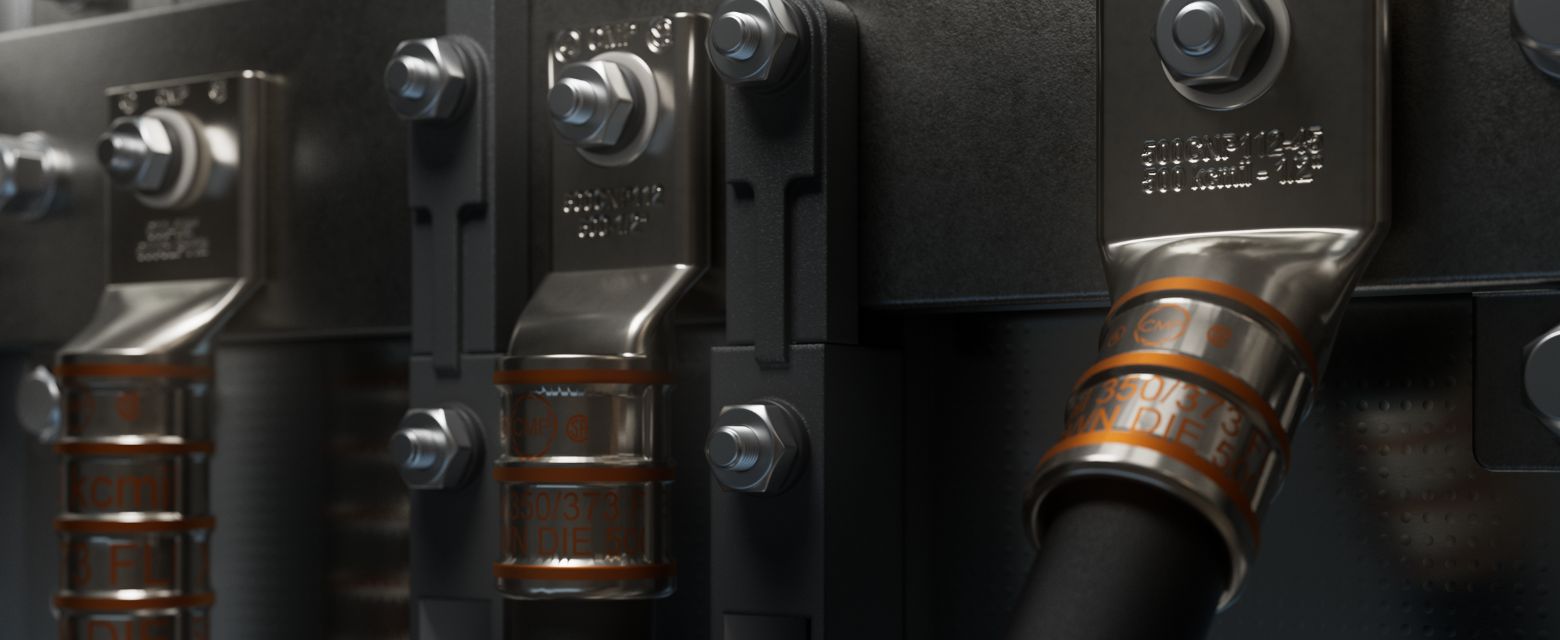
A cable lug is an electrical connector used to terminate a cable or conductor and create a secure connection to electrical equipment, such as a busbar, switchgear, transformer, circuit breaker or other termination point.
Cable lugs are commonly attached to the conductor by compression crimping, where a crimping tool and correctly selected die apply controlled force to compress the barrel of the lug around the conductor.
The completed connection provides both an electrical path and a mechanically secure termination, making correct cable lug selection and installation important to the overall reliability of an electrical system.
CMP ZerOhm compression cable lugs and splices are designed to provide reliable electrical connections across a wide range of conductor sizes and applications.
What Does a Cable Lug Do?
The primary purpose of a cable lug is to provide a secure interface between an electrical conductor and the equipment it is connecting to.
A correctly selected and installed cable lug helps provide:
Electrical Continuity
The lug creates a conductive connection between the cable and electrical equipment, allowing current to pass through the termination efficiently.
The material, dimensions and quality of the crimp all influence the electrical performance of the completed connection.
Mechanical Strength
The crimped connection must securely retain the conductor during installation and throughout its operating life.
Applicable ZerOhm Pro products are tested against mechanical requirements including secureness and pull-out testing as part of UL 486A-486B and CSA C22.2 No. 65 certification.
Reliable Long-Term Connection
A properly installed lug should maintain its electrical and mechanical properties throughout operation.
For this reason, cable lug performance depends not only on the lug itself, but also on selecting the correct conductor, crimping die, crimping tool and crimping procedure.
How Does a Compression Cable Lug Work?
A compression cable lug consists primarily of two sections:
Barrel
The conductor is inserted into the barrel of the lug.
A crimping tool and die then apply controlled compression to the barrel, deforming it around the conductor to create the electrical and mechanical connection.
Palm
The palm is the flat connection area of the lug and is normally secured to equipment using one or more bolts or studs.
Depending on the application, palms can be supplied in different configurations including:
- One-hole
- Two-hole
- Narrow palm
- Blank palm
- 45° angled palm
- 90° angled palm
CMP’s ZerOhm Pro range offers multiple barrel, palm and stud-hole configurations to accommodate different installation requirements.